Erasure, the trailer.
This South Asian Heritage Month, we sit down with sisters Samantha and Sabrina, the creative force behind Malligai Films, ahead of the release of their new short film, 'Erasure'.
A 10-minute movement piece fusing contemporary dance with South Indian Kuthu, 'Erasure' imagines a virus that strips people of their humanity, using the body rather than dialogue to explore cultural and racial erasure, trauma, and resistance.
The film is fully independent and self-funded, and the sisters are launching a crowdfunding campaign on 11th July to bring it to life.
Their ask is simple: support the dancers, crew, equipment, location, and post-production that will carry 'Erasure' from concept to screen.
Samantha and Sabrina talk us through the world they have built, why movement became their language of choice, and why now, during South Asian Heritage Month, is the moment to back independent South Asian storytelling.


Meet Samantha, the writer & director behind Erasure

Meet Sabrina, the producer behind Erasure
“Erasure” imagines a virus that strips people of their humanity. Before we get into the story, what does this world actually look like on screen?
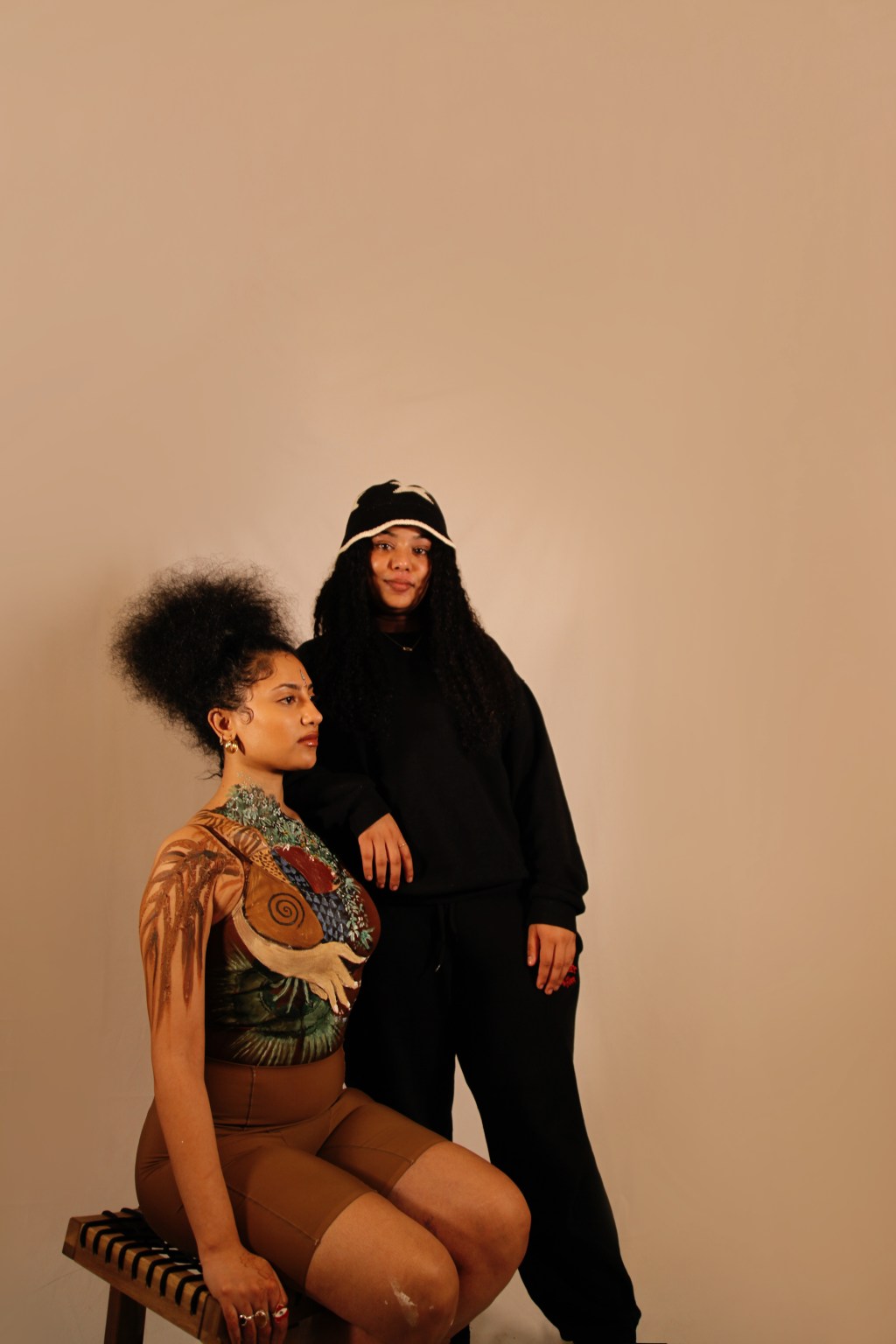
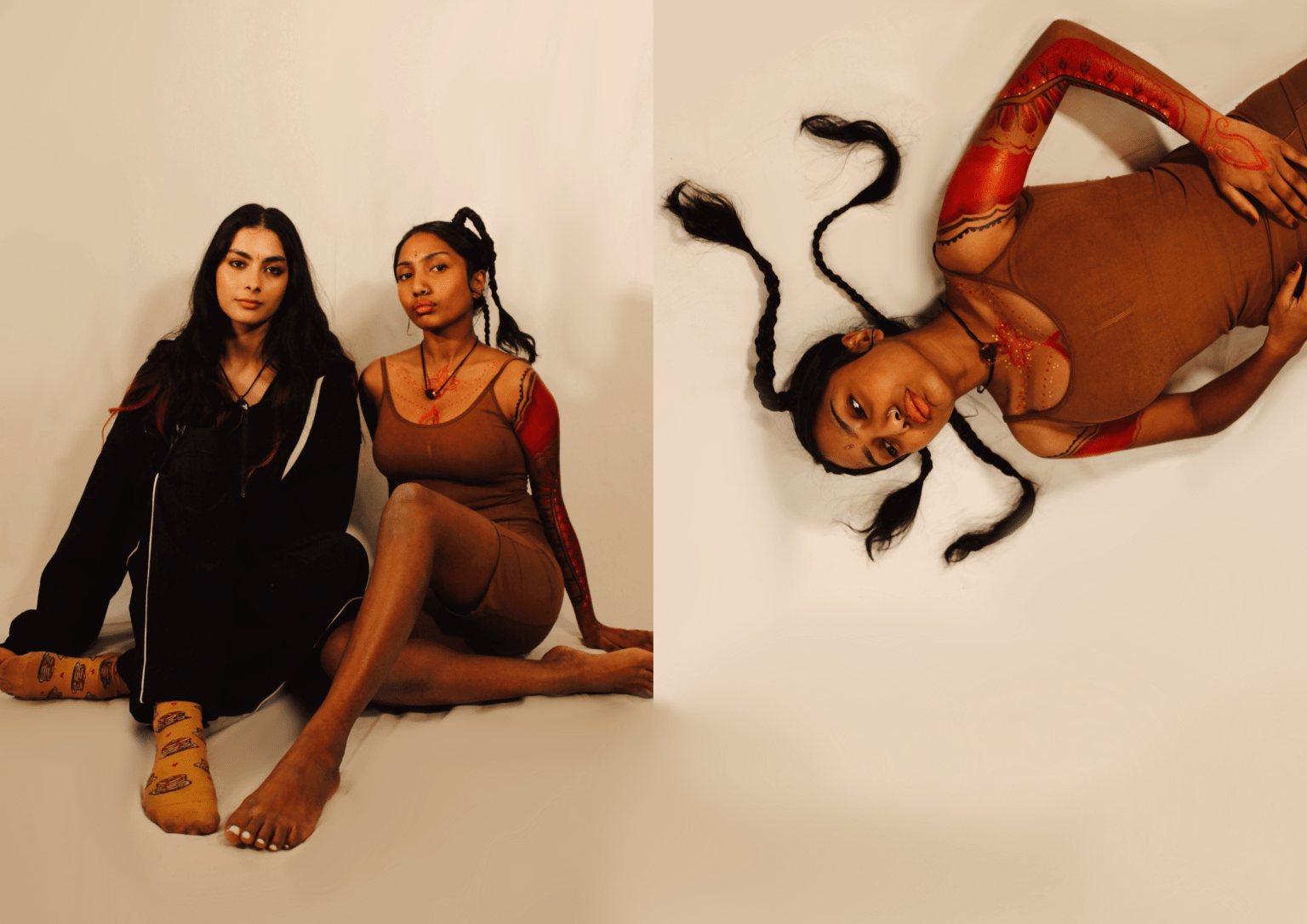
Samantha (writer-director): The world of Erasure exists as a kind of sub-space, a white, clinical void where nothing exists except the people and the virus. It is both claustrophobic and expansive; there is no visible end, yet everything feels like a dead end.
The space carries this contradiction throughout the film: it is chaotic and corrosive, yet strangely serene and beautiful. We wanted it to feel like a dystopian sci-fi invasion, except the invading force isn’t an alien; it’s a virus. A haunting, organic mass that grows, pulsates, and consumes everything in its path.
The dancers exist almost like husks of who they once were, bodies fighting against something invisible but ever-present. The world reflects the process of their humanity and expression being slowly consumed

This isn’t a dialogue-driven film rather it’s told through the body. Why did you, the director, choose dance and movement as the way to tell a story about erasure and survival?
Samantha: I remember reading The Body Keeps the Score by Bessel van der Kolk, which explores how trauma is stored physically within us – how our bodies remember experiences even after the event itself has passed. The book speaks about how pain can manifest through our heartbeat, our breath, our muscles, and our nervous system.
That deeply influenced how I think about storytelling. I’ve experienced moments where something emotionally difficult or painful has stayed with me physically, where my body carried something that my voice couldn’t articulate.
For Erasure, movement became the strongest form of expression because sometimes our bodies speak before we have the language to explain what we feel.
As a dancer studying contemporary dance at London Contemporary Dance School (The Place), I’ve also been encouraged to think about dance beyond the traditional stage as a tool for storytelling and confronting ideas. Through this film, I wanted the body itself to become the narrator.


“Erasure” fuses contemporary dance with South Indian Kuthu. For people unfamiliar with Kuthu, how does that tradition show up in this futuristic setting?
Samantha: Kuthu, or Dappankuthu, is something I grew up seeing in Tamil cinema. It was often used as a moment of celebration, when a hero entered the screen or after a major victory. But outside of cinema, I’ve also witnessed Kuthu carry a much deeper emotional meaning.
In Tamil communities, dance and rhythm can also become a way of processing grief. At funerals, people sometimes dance to overwhelming drum rhythms, like the body is trying to release emotions that words cannot hold. The rhythm becomes faster than the heartbeat, faster than the racing mind, and eventually the drums take over.
That feeling of chaos, release, and survival is what I wanted to bring into Erasure. By combining Kuthu with contemporary movement, we are able to transform this traditional language into something futuristic; a physical response to trauma, resistance, and the fight to remain human.

Behind this project is Malligai Films, an indie production company already premiering at Oscar-qualifying festivals - who’s the team bringing “Erasure” to life?
Sabrina: Malligai Films was founded by myself and my mother, Amali Sebastian, initially to create my debut film Elisai, which premiered at the Oscar-qualifying Tasveer Film Festival. Since then, my sister Samantha has become an integral part of the company, bringing Erasure to life as its writer, director, and choreographer.
We’re also collaborating again with cinematographer Tran Anh Duy Phimasset, who was part of our Elisai team, alongside an incredible group of artists and creatives. Our music composer hadi. alongside Samantha has created a soundscape that merges the intensity of Kuthu with industrial music, bringing together tradition and experimentation.
At Malligai Films, our mission is to nurture voices that challenge conventions and bring authenticity and experimentation to the forefront. We’re interested in stories that confront the absurdity of existence, interrogate social realities, and explore the contradictions of being human, and Erasure embodies that vision.

“Erasure” is fully independent and self-funded - what does the crowdfunding unlock, and why does backing it now, during South Asian Heritage Month, matter?
Sabrina: Erasure explores the kind of erasure that is often invisible; the quiet moments where someone’s culture, history, or humanity is denied recognition until that absence begins to shape them.
The virus in Erasure becomes an allegory for these wider experiences of erasure, from personal encounters to larger systems of oppression.
Through a 10-minute movement film, we explore themes of cultural and racial erasure, war, animal cruelty, suppression of expression, and the systems that attempt to control who gets to be seen and heard.
This film is for the artists, activists, creatives, and anyone who believes that storytelling can challenge the world around us. We create work that questions societal norms and confronts uncomfortable realities, but those are often the stories that struggle most to receive traditional funding.
Our crowdfund will directly support the dancers, crew, equipment, location, and post-production – helping us bring this ambitious vision to life independently.
We are launching our crowdfunding campaign on 11th July on our page and website, and we invite anyone who believes in the power of art as a form of resistance, awareness, and change to be part of this journey.

You can find the team behind "Erasure" and Malligai Films
on Instagram at:
@samantha.amali.joseph
@_sabrinema
@malligaifilms
@erasuredancefilm