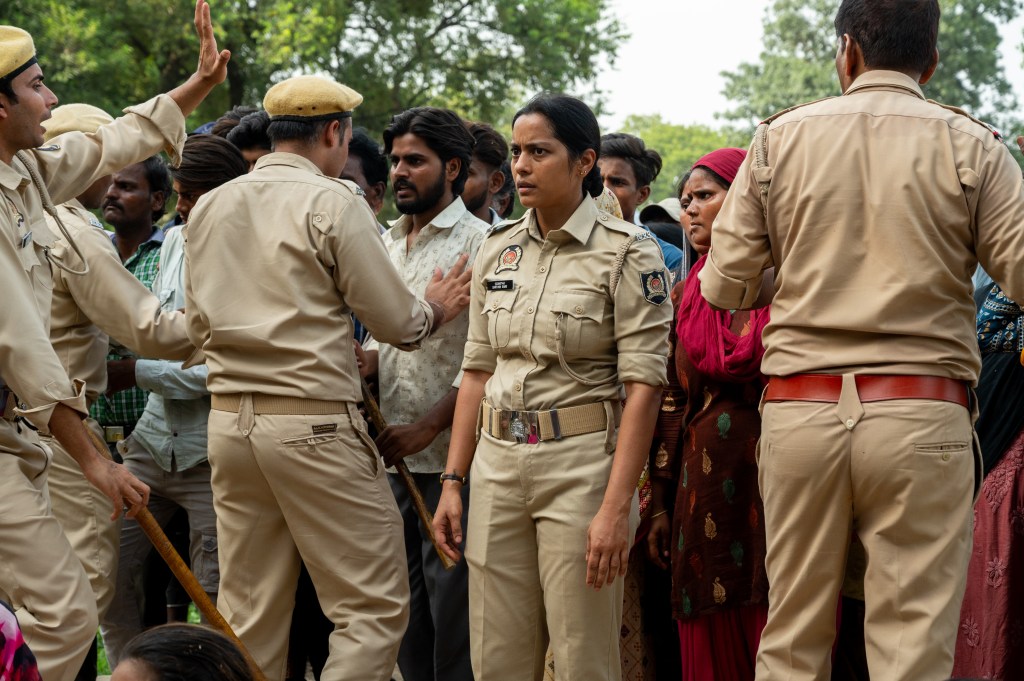
British-Indian documentary filmmaker Sandhya Suri makes her debut into feature film starring Shahana Goswami and Sunita Rajwar as the protagonists. The film, Santosh, immediately immerses you into rural North India as we watch Santosh pick up the broken pieces of her life in an attempt to find sense in the world again while investigating the murder of a Dalit teenage villager. The film follows Santosh, a young widow, as she navigates through the trials and tribulations of police corruption, casteism, sexism and Islamophobia in an effort to regain independence and honour her late husband’s passing. Santosh exposed the seedy underbelly of India’s police force through a raw, brutal and honest depiction of dirty politics, bribery and power run rampant. It came as no surprise when the film gained international recognition for its delicate yet efficacious storytelling.
Santosh received 14 award nominations and won seven awards including a BAFTA nomination for best screenplay. It was also nominated at the Cannes Film Festival 2024 under the Un Certain Regard category and was nominated for the Sutherland Award for the Best Film Feature at the BFI London Film Festival. In addition to an already impressive list of accolades, Suri’s film was UK’s official submission for the Academy Awards, making its way into the top 15 films list.
It’s clear that Santosh is a powerful film that has the potential to incite change and impact its viewers. Consequently, it is rather disappointing to witness the censorship it has been subjected to in Indian media at the hands of the Indian government. The restriction of the film’s release in India says more about the image the government wants to protect than the film itself.
Santosh was conceived following the Nirbhaya case – a rape case that rocked the nation and the world as hundreds of thousands of people gathered to mourn the tragedy and protest the injustice in 2012. Suri found herself drawn to a female police officer working the riots and she began to explore the interjunction of uniform, power and violence. She creates each scene with detail that can easily be missed by untrained eyes and ears, mimicking Santosh’s quiet but observant demeanour.
Watching the film I was particularly struck with the ravaging undercurrent of violence and blatant humiliation that haunted the entirety of the film. Watching the police force grapple with the addictive, tantalising taste of power and the sheer abuse of said power filled me with fear, particularly through the use of diegetic sound – there was no hiding from our suppressed, animalistic and primal desires. It also led me to wonder – is there room for justice in India when corruption and abuse scurry along judicial systems, like rats in back alleys?
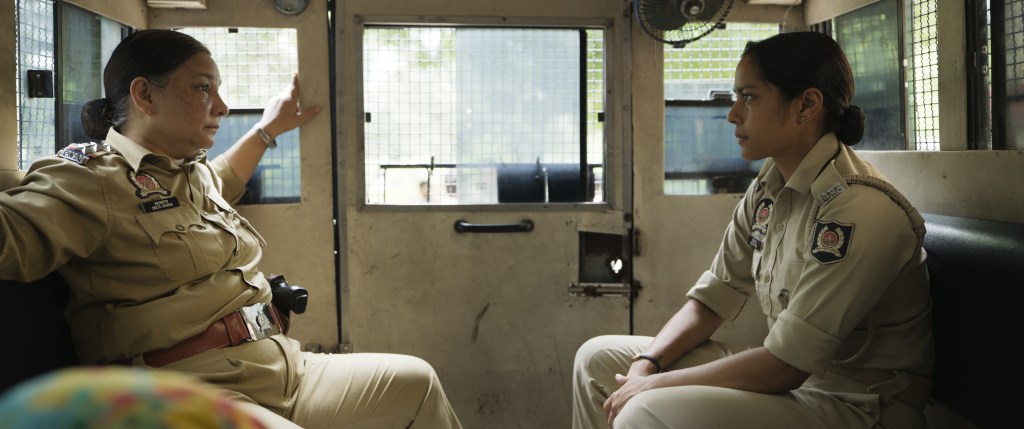
Santosh and Inspector Sharma, an authoritative female police officer, inculcate a burgeoning friendship and the narrative begins to take one of female solidarity in the face of the patriarchy. But Inspector Sharma’s cunning nature soon begins to warp Santosh as she too, gets caught in the web woven of flawed institutions, arrogance and shame. The themes within Santosh are carried across borders, communities and governments. It forces you to confront your own prejudiced thinking and question your morality against the norms of institutional and cultural practices.
I was lucky to be able to interview Shahana Goswami and we shared a riveting conversation discussing the themes in the film and the socio-political troubles that Indians are often faced with. I wanted to know, after experiencing Santosh’s character and managing the guilt, shame, fear she is faced with, does Goswami see a future where there is improvement in the justice system? Is there hope for the average Indian yet? She believes that change begins at the grassroots level, with individuals, with people making changes in their daily lives. We need to actively consider the impact of our hypocrisy and take responsibility for it. The intention of the film was to “create an inner stir that is reflected in our outer reality”.
Shahana had to access a much deeper, private part of herself in order to do Santosh’s character justice. She chooses to use complex notions of guilt and repressed anger as a vessel to bridge the distance between herself and Santosh. Playing this character did not result in Shahana carrying the weight of guilt or shame with her, but rather it served as a cathartic release of emotions which proved to be therapeutic. While women are often demonised for abrasive reactions, Goswami says “we tend to add virtue and morality to emotions {…} when each of those emotions have a role to play, when it is expected and demanded of you”. Drawing a parallel to the famed Pixar movie ‘Inside out’, she continues “you have all these emotions and they have good intentions and a role to play. You have to let the orchestra play out in a melodic way and trust the melody that comes out”.
Sandhya Suri’s feature film debut is a commendable one. It’s safe to say that Santosh illuminated parts of my psyche that I do not often interact with. While watching the film I felt viscerally disgusted, ashamed and weak. At the same time, I felt anger, vengeance and power. Santosh effectively explores two sides of the same coin, the same person and it begs you to consider – who are you with and without power? And what do you choose to do with it?
Santosh is currently playing in cinemas across the UK and Ireland. You can book tickets across the following platforms:
https://www.myvue.com/film/santosh
https://www.odeon.co.uk/films/santosh/HO00007003
https://www.picturehouses.com/movie-details/000/HO00015982/santosh