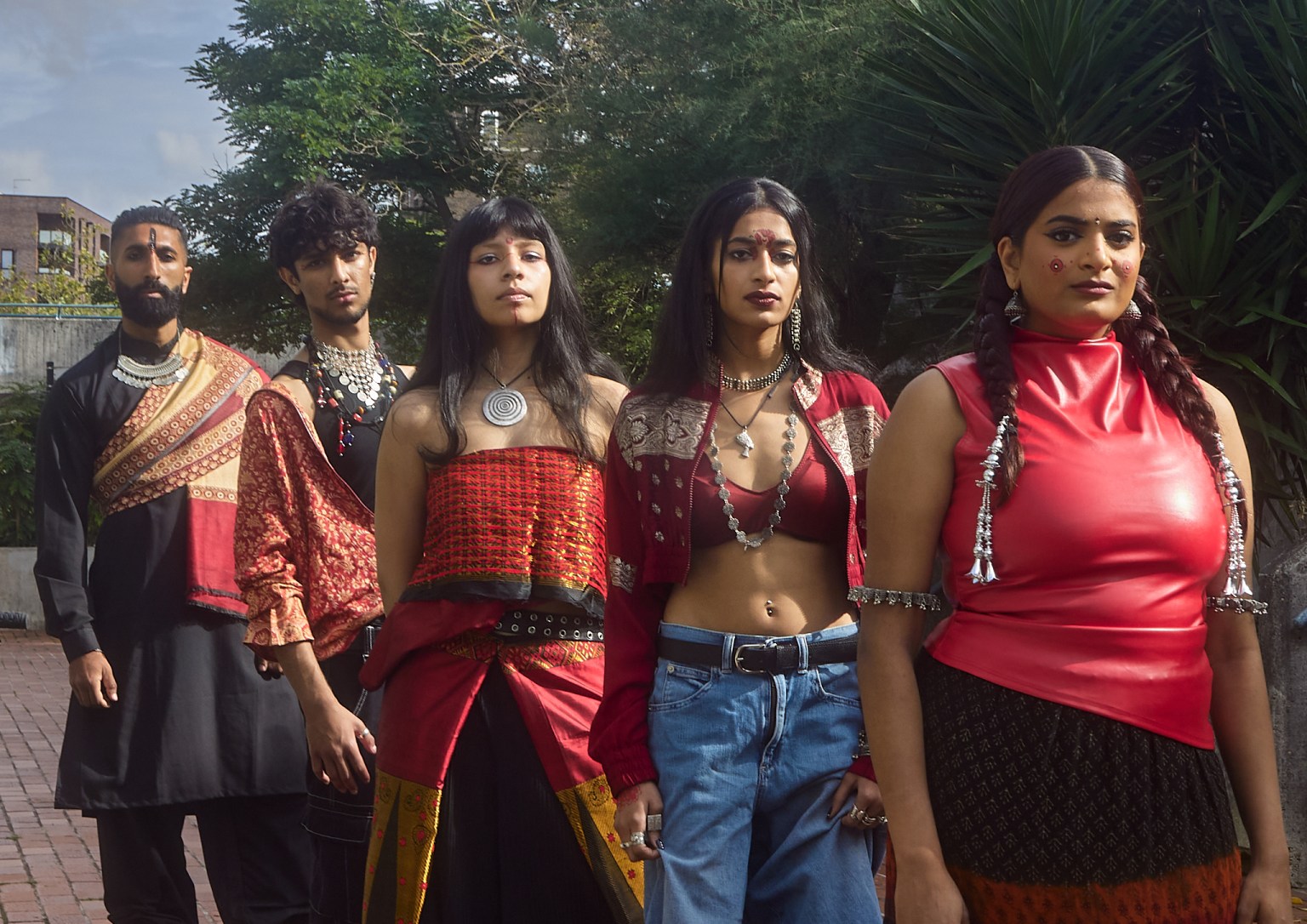
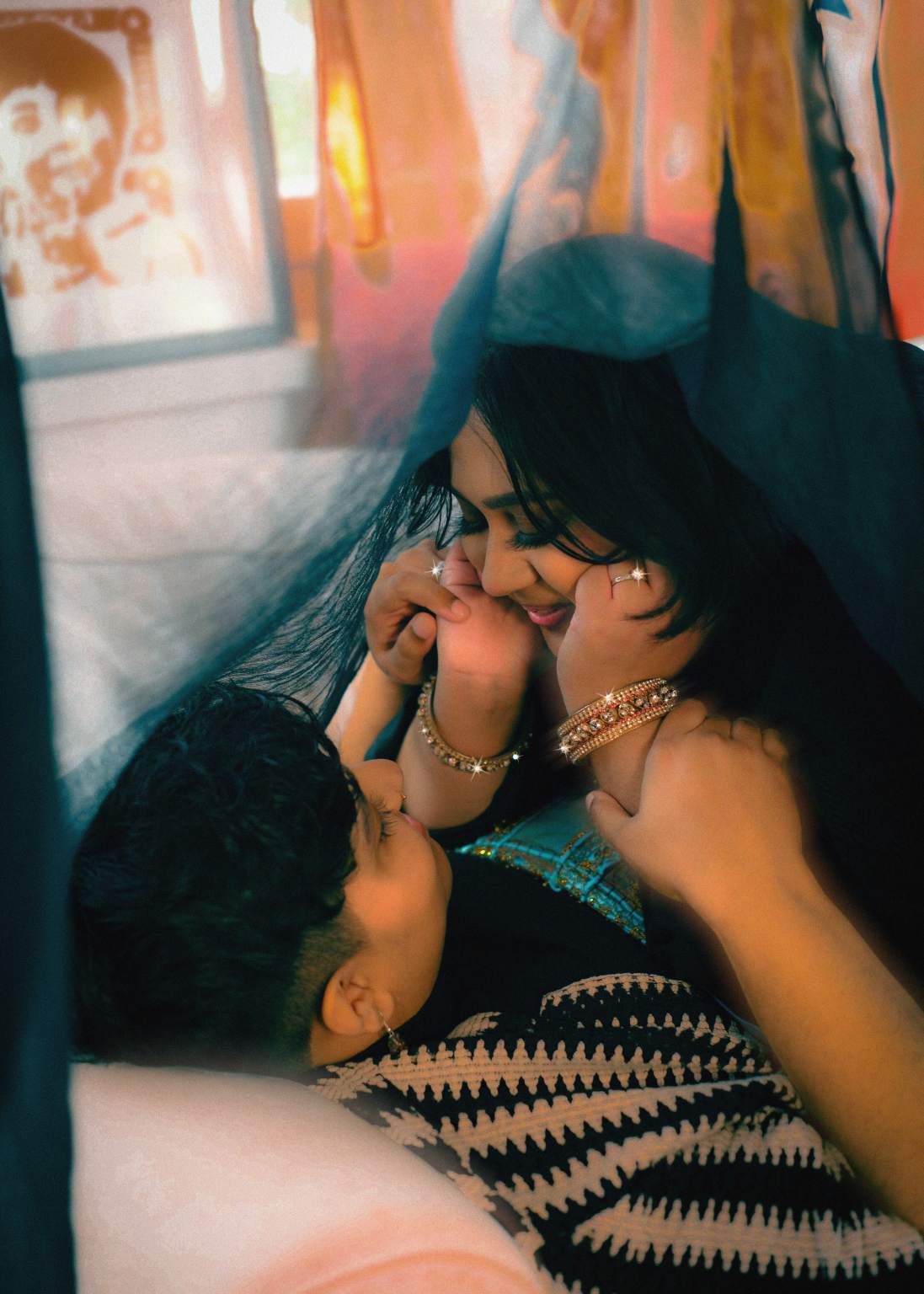
Jiska pata humko bhi hai,
Jiski khabar tumko bhi hai.
Duniya se bhi chupta nahi, jane ye kaisa raaz hai.
ZNMD
“Something that I am aware of and so are you. It cannot be hidden from the world either, what kind of secret is this?”
You can always see love in their eyes, it’s what helps you believe in it. That moment where they hold their breaths and their eyes hold their secrets, a second away from spilling the truth. Seeing love on the screen and in books, it felt palpable, just in that very moment.
We already know that the media we consume for entertainment sets us up with unrealistic expectations of life. Sometimes those expectations are set up from a young age, watching Bollywood movies crouched in front of the TV, while hearing your parents fight in the living room. The thought of dismantling a tangled web of ideas about love, sex, intimacy, and relationships feels like trying to stop sand from sinking. And yet, here we are.
What love should look like doesn’t always translate into real life, but I was so mesmerised with the possibility of what could be that I failed to recognize the difficulty in truly accepting love—healthy love. Growing up in a desi household, love was confusing. I saw the South Asian ideal of romantic love on the television, which was cradled in longing looks, courtship, and intimate declarations of love. In my reality, which was often shared with others, love was left in unsaid words and in the quiet hum of tension under the surface.
It is an odd thing when you grow to live with tension because once it begins to feel like home, you don’t realise the weight of it until you leave.
When you feel like your own culture has failed you in some aspect, you tend to look for the same sense of comfort elsewhere. My resentment for romance in South Asian cinema grew over the years, as the reality of it that I faced seemed to get bleaker. I found it increasingly difficult to believe in a reality where a South Asian couple could survive a long-term, healthy co-existence, without the interruption of familial and societal judgment and free of the social conditioning that dictates the operations of our communities.
I grasped at comfort in Western ideals of romance, and for a few years, they placated my hopes in love. But placated is not the same as fulfilled, and the feeling of being out of place never truly left me.
As time passed, my interactions with Western communities increased. No longer was I bound by the conditions of my South Asian upbringing, because I was now given real insight into how other communities operated. While I had consumed Western media, interacting in their spaces was filled with many more nuances than I’d anticipated.
Western media traditionally does not cater to P.O.C communities that have integrated into Western society—which meant I had been creating an understanding of these communities on unknown false pretenses. Navigating their ideals as a person of colour, that sits as an outsider, is not only incredibly intimidating but also somewhat of a culture shock.
So when it came to dating, as a brown woman who strived to conquer the Western lens, I walked headfirst into unrealistic perceptions of what it would be like.
I did not realise how deeply the stereotypes of South Asians ran through other communities. I did not know that generally, South Asians are seen to be less attractive. I was blissfully ignorant that the way we talked, the food we ate, and the heritage that we valued so highly were often a means for mockery and disdain. I started internalising the belief I was simply not desirable and worthy of intimacy because of where I came from and that I didn’t fit into a Eurocentric standard.
It is a belief, I came to learn some time later, that is shared within our community. It is a belief that sets you up for troubled self-esteem and unhealthy boundaries. The need to feel desired and wanted is human—but when you’re faced with constant disrespect to your identity, it’s easy to feel unworthy of love and give into isolation.
When platforms capable of impact, like those in the media, misrepresent your community and its true reality, it feels like change is impossible. Small changes can have an immeasurable impact. In order to change our story, we must learn to reflect on how to redefine it. If we don’t allow ourselves to step away from expectations, redefining a narrative may not be possible.
As the South Asian community begins to change the current narrative on our screens, we have also begun conversations within the community about the importance and impact of representation. From panel talks focused on the South Asian story to cinema finally having more respectful representation, the shift in mentality has transcended from wishful thinking to tangible outcomes. Around the globe, the new generation can engage in safe spaces for honest conversations, can identify South Asians in positions of power, and will break the box that we have historically been placed in.
Being a child of the South Asian diaspora, my exposure to different philosophies about love left me with an internal struggle, not understanding where my idea of love will fit. But why does my idea of love need to fit anywhere? To reconstruct my idea of love, I had to separate myself from all the ideals about love that I had encountered.
I believe that respect is one of the most significant aspects of love. Respecting myself means accepting that I am worthy of love and desire, regardless of how I may be perceived. It means staying authentic to myself and maintaining my boundaries that honour my growth and my values.
This is what love looks like to me, at 21 years old. I’m sure it’ll continue to evolve as my priorities change, and it may look vastly different at 30 years old. It still remains important to remind myself that I am not bound by any ideologies—by my environment, my cultures, or even by my own understanding of love.
It takes lifetimes to understand all complexities that come with our relationships with love. By no means is it an easy journey, but it is one that merits our time, honesty, and vulnerability.
Laying with love.