Saffah Anjum: First of all, congratulations on the release of Cactus Pears. It premiered at Sundance and it’s your debut feature – why was this the story you wanted to tell first?
Rohan Kanawade: Thank you. The seed of Cactus Pears actually came from a very personal place. In 2016, my father passed away. I had to go back to my village for the ten‑day grieving period.
For almost a decade before that, I’d been avoiding going there because every visit turned into questions about my marriage. I didn’t know how to navigate those conversations without coming out, and I was scared of how people might react – not just to me, but to my mother, who really needed that family support after losing her partner.
When my father died, there was no escape. We went because all the relatives are there and they needed to be part of the rituals. As soon as I arrived, the marriage questions started again. I decided I wouldn’t say anything, I’d just endure it and go back to Mumbai.
But in the middle of that pressure, I had this thought: What if I had a friend in this village who knew about me? Someone I could sneak away with, just for a while, to escape all this marriage talk. That became the first spark of the film.
I realised I could make a story set over those ten days of mourning but infuse it with love, tenderness, and hope – a story that starts with death and moves towards love blossoming between two men, and ends on a hopeful note. The rituals, the soundscape, the visuals, the emotions I was going through… I wanted to capture all of that. That idea kept us chasing this film for five years.
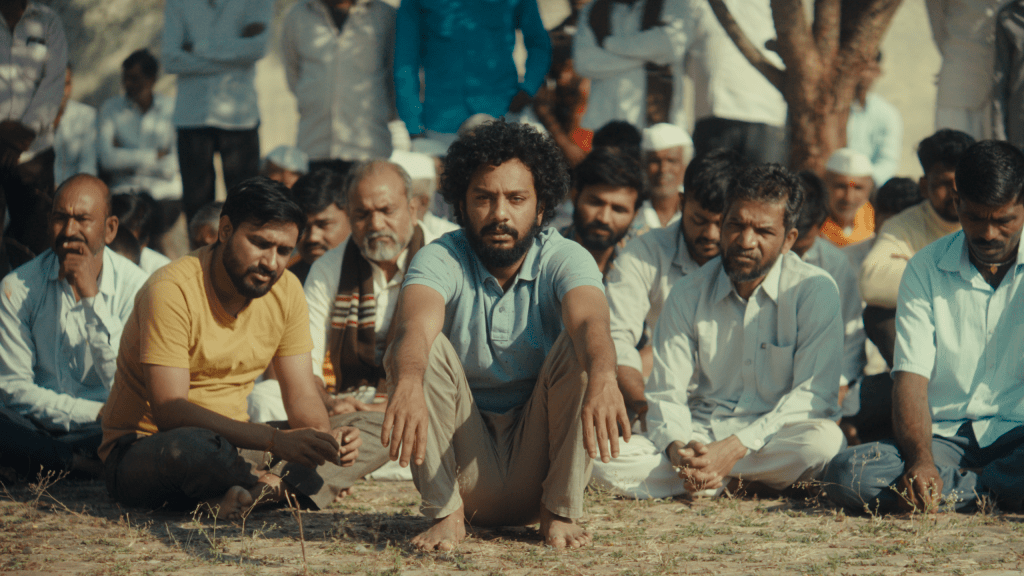
Film Still, Cactus Pears (Sabar Bonda)
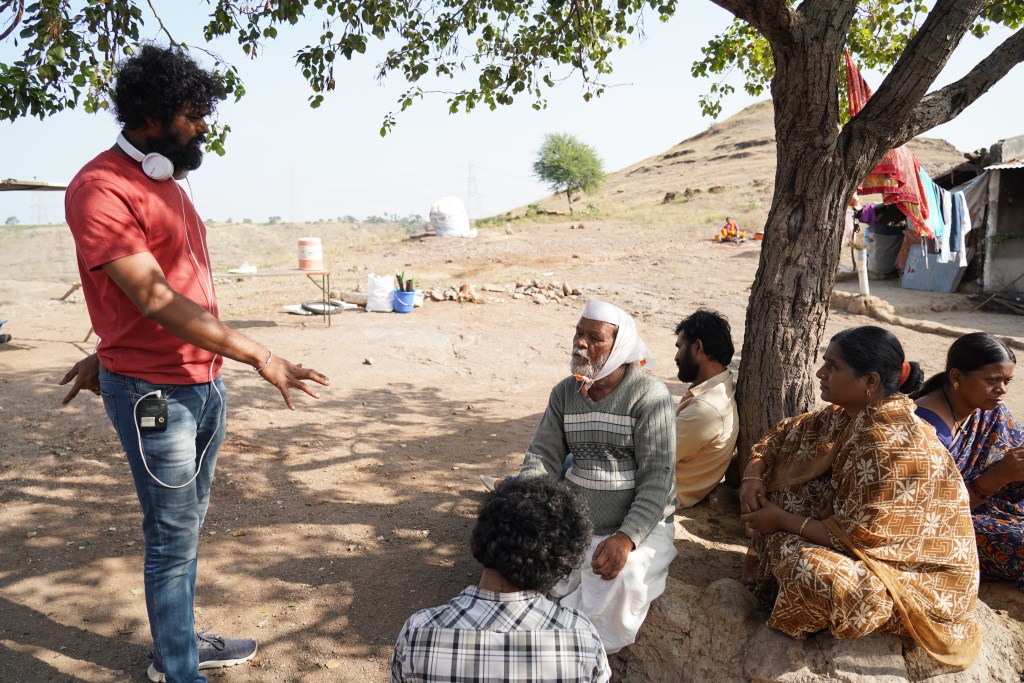
Rohan Kanawade on set for Cactus Pears (Sabar Bonda)
On Queer Love, Intimacy, and Silence
Saffah Anjum: One of the things that really struck me about Cactus Pears is the different forms of intimacy in the film; romantic, familial, grief, tenderness. How did you approach those moments, and how did you want to communicate them through your characters?
Rohan Kanawade: One thing I was very clear about was that I didn’t want to make a “queer film” in the narrow sense, like, ‘Look, these are gay characters’. I wanted to portray them as human beings first. Sexuality is part of their lives, but it isn’t the only thing.
They have parents, relatives, complicated relationships with family, they experience grief, they fall in love, they deal with nosy aunties asking invasive questions. These are all universal experiences. I felt that if I captured those emotions honestly and authentically, people anywhere, not just in India, would connect with the film.
We’ve already seen that. The film has had a small release in Chile, and people there have connected deeply with it and written to me about how much they loved it. That confirmed my belief that human emotions are universal if you tell them truthfully.
Saffah Anjum: Within that, there are some really powerful moments where silence seems to say more than dialogue. Were there particular scenes where you felt silence carried the intimacy?
Rohan Kanawade: Absolutely. There’s a sequence between the two men where, at first, there’s this awkwardness. I think people really understand that feeling – like when you meet a childhood crush after many years. You want to say so many things and you can’t, so you sit in that awkward silence.
In real life we rarely say everything we feel. The unsaid, the pauses, the awkward smiles; audiences read all of that. I didn’t need to overwrite it with dialogue.
There’s also an intimate scene where they aren’t saying anything at all; they’re just lying in each other’s arms. People can feel that the love there is more than physical, there’s an emotional connection. Just showing them in that moment is enough; any dialogue would have weakened it.
Silence is a part of everyday life. We all have moments when we’re sitting with ourselves, or with someone we love, without talking. But films are often afraid of silence and fill it with music. Here, we let those silences breathe. One actor in India said something beautiful after seeing the film: “There is silence in the film, but in that silence, the audience starts talking to themselves.” That really stayed with me.
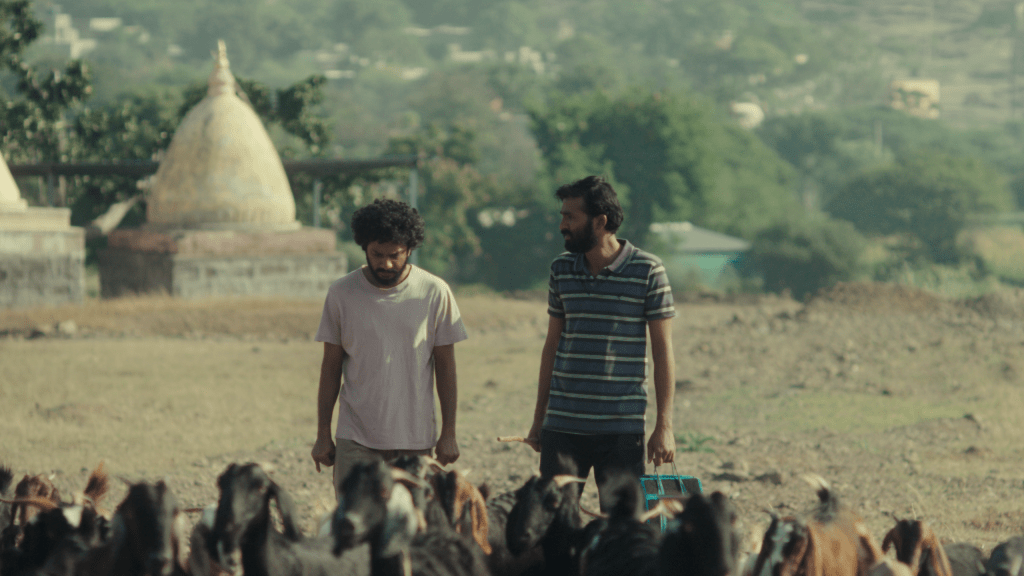
Film Still, Cactus Pears (Sabar Bonda)
Intimate Moments Inspired by What Real Life Didn’t Give
Saffah Anjum: Do you have a favourite intimate moment in the film?
Rohan Kanawade: Honestly, I love all of them. But two stand out.
There’s a sequence between the mother and father. When the actors, Jayshri Jagtap and Bhushaan Manoj, performed it – there’s a moment where he rests his head in her lap – I got emotional on set and had tears in my eyes during the first take. I knew if it moved me that much, some audience members would feel it too. And that’s happened again and again in screenings.
The other one is a moment with the father and son. I never really hugged my own father. He wasn’t a bad person at all, but physical intimacy just wasn’t part of our dynamic. So that moment of a son hugging his father is something I never experienced in my real life, but the film allowed me to create it. It’s like I could give that moment to myself through the characters.
The mother‑son intimacy in the film actually came from watching my partner and his mother. She passed away from cancer two years ago, but before that I saw how affectionate they were – he’d hug her, she’d kiss him on the cheek. I never had that with my own mother; we’re both quiet people. I borrowed those gestures from watching them and from seeing other people with their parents. They were little things I wished I’d had, so I put them in the film.
I think those moments resonate because there are many people like me, queer or not, who haven’t experienced that kind of physical tenderness with their parents but long for it.
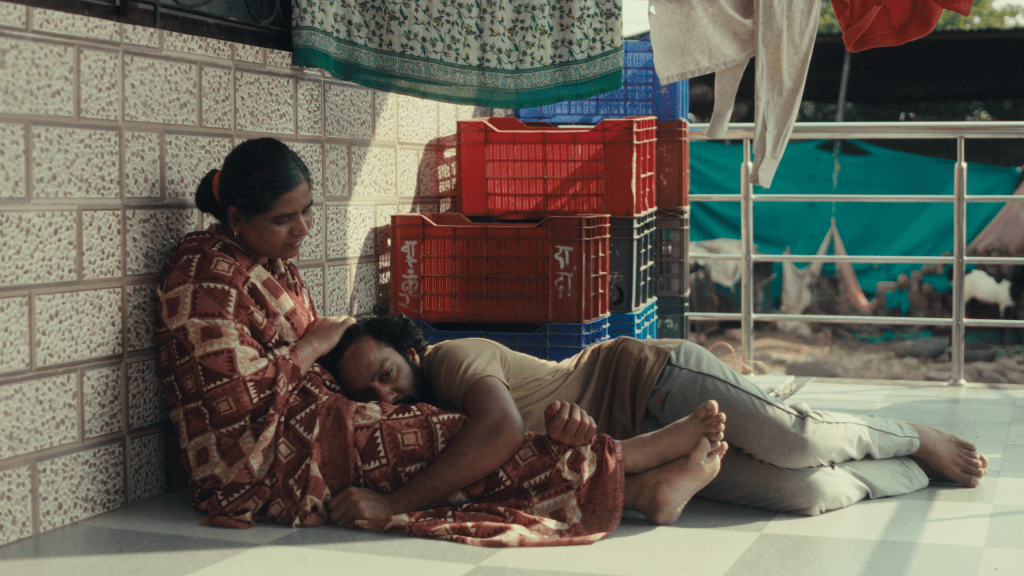
Film Still, Cactus Pears (Sabar Bonda)

Rohan Kanawade on set for Cactus Pears (Sabar Bonda)
Grief, Healing, and the Power to Start Conversations
Saffah Anjum: The film is so rooted in grief, but it feels incredibly healing too. Have you seen it change how audiences talk about their own lives?
Rohan Kanawade: Yes, and that’s been the most rewarding part.
At a screening in Delhi, during the Q&A, a young man stood up and said, “I’m not out to my mom yet, and I don’t think she’ll ever understand. A film like this gives me the chance to experience something I can’t in my real life right now.”
For him, the film became a space to live out a kind of acceptance and tenderness he hasn’t yet received at home. That meant a lot to me, because that was the intention – to give people a safe emotional space.
There have also been people who used the film to actually come out. One guy took his parents to see it. On the way home he started talking about the main character and said, “You know, I think he should have just listened to his parents and married a girl.” And his parents said, “Why? He did the right thing by not marrying a girl.” That opened up a conversation, and when they got home he told them, “I’m like Anand.” And his parents accepted him.
Stories like that make all the struggle worth it. I also hoped the film would help some parents who are struggling to accept their queer children, to give them a way to move a little closer to understanding.

Film Still, Cactus Pears (Sabar Bonda)
Family Expectations and Refusing to Villainise
Saffah Anjum: The film touches so deeply on marriage, family duty, and societal expectations, things so many South Asians recognise. What I loved is that no one really feels like a villain. How important was that for you?
Rohan Kanawade: Very important. In real life, people are rarely villains in the way we see in films.
Take my own relatives as an example. They were constantly talking about my marriage, but they didn’t know about my sexuality. From their perspective, here’s a 30‑year‑old man who has just lost his father, whose mother is alone, and they’re thinking: He needs someone in his life. We should help him get married. In their minds, they were doing the best thing for me.
The problem is often half‑knowledge. They don’t have the full picture, they don’t understand queerness, but the intention isn’t always malicious. Even around my father’s cremation, some relatives said I shouldn’t do certain rituals because I wasn’t married but ultimately they did let me do them. There was no big dramatic confrontation like in some movies.
Over time, without me formally “coming out” to them, their questions have shifted. They’ve stopped asking when I’m getting married and now ask when my next film is coming out. They ask about my partner too, even though I’ve never sat them down and said, “He’s my partner.” They’ll say, “Bring him next time, how is he?” That’s a quiet form of acceptance.
I wanted to show that reality – that people contain contradictions, they can be loving and limited at the same time. There is drama in nuance and kindness too. We just don’t see it often because filmmakers think only conflict and rejection are cinematic.
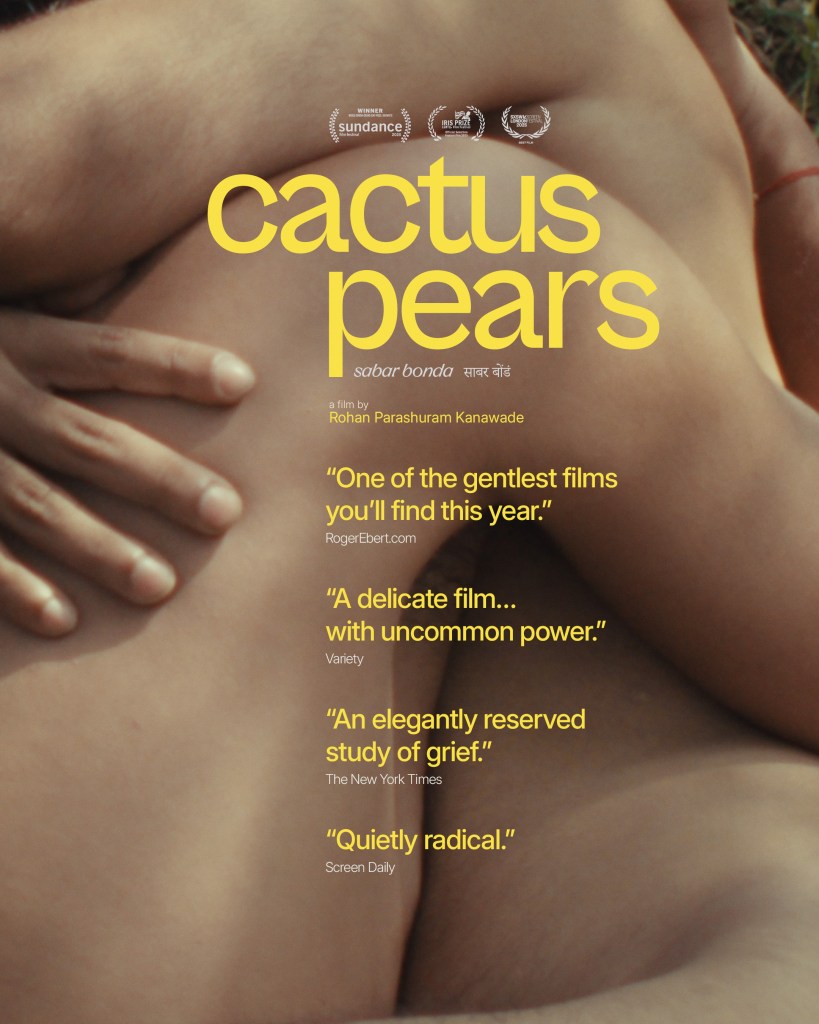
Film Poster for Cactus Pears (Sabar Bonda)
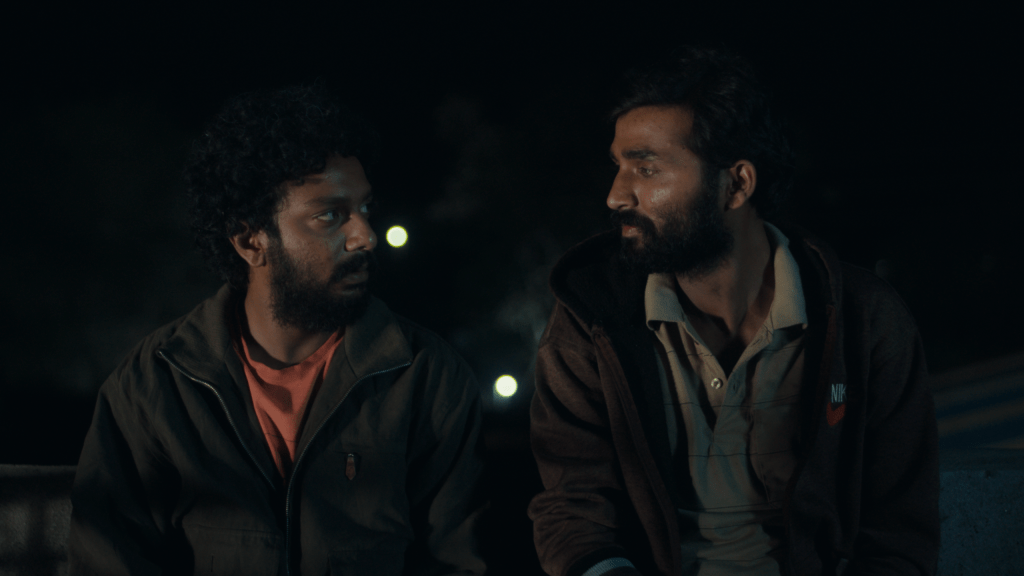
Film Still, Cactus Pears (Sabar Bonda)
Rural Queer Experiences and Being “Seen”
Saffah Anjum: Rural areas in films are often framed as oppressive, regressive spaces. In Cactus Pears, the village feels nuanced and alive, not just a site of trauma. How important was it for you to show queer life in rural India that wasn’t only about suffering?
Rohan Kanawade: Extremely important. I know queer people in rural India who haven’t gone through the kind of overt trauma we usually see on screen. Their lives are complex, but not only tragic.
Most queer films tend to be set in upper‑class, urban environments. I wanted people from rural areas, from small towns, from lower‑income backgrounds to be able to see themselves – to say, “That’s my life. I know that job, that house, that kind of family.”
One of the characters, Balya, is a farmer and goat‑herder. I know men who do that work and are also queer. I wanted them to feel okay, to feel seen. Even in the village, people use apps like Grindr, they have desire, they fall in love. They might not have the vocabulary or labels, but human desire is human desire. It’s not different in a city versus a village.
That authenticity – showing real jobs, real houses, real rituals – was crucial.

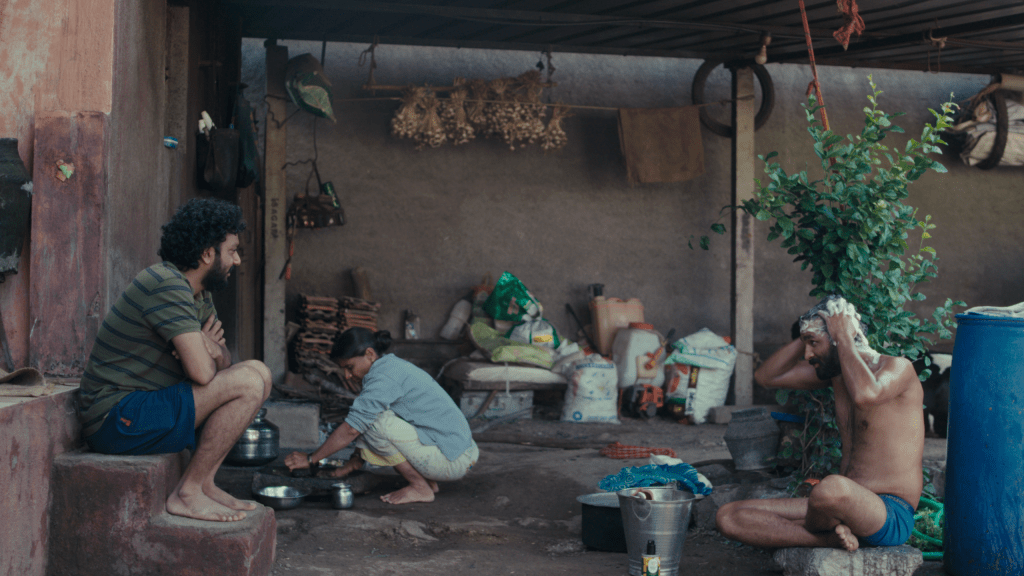
Film Still, Cactus Pears (Sabar Bonda)
“Being Gay Is Western”? Grounding Queerness in Indian Soil
Saffah Anjum: You also seem to be actively challenging the idea that queerness is somehow “un‑Indian” or imported from the West.
Rohan Kanawade: Yes. I’ve had conversations with colleagues who say, “This sexuality thing, being gay, it’s Western. It’s not Indian.” And I always ask them: I know people from rural India who have never seen a gay film, who don’t know what Pride is, who haven’t consumed any Western queer media and yet they feel the same things. How do you explain that?
Setting Cactus Pears in rural India allowed me to ground same‑sex love firmly in our own soil, with our own rituals, our own landscapes, our own families. One critic in India put it beautifully: they said “same‑sex love in the film feels as natural as the trees under which the two men sit.” That’s exactly what I wanted. To show that it’s not foreign, not imported, just human and deeply rooted here.
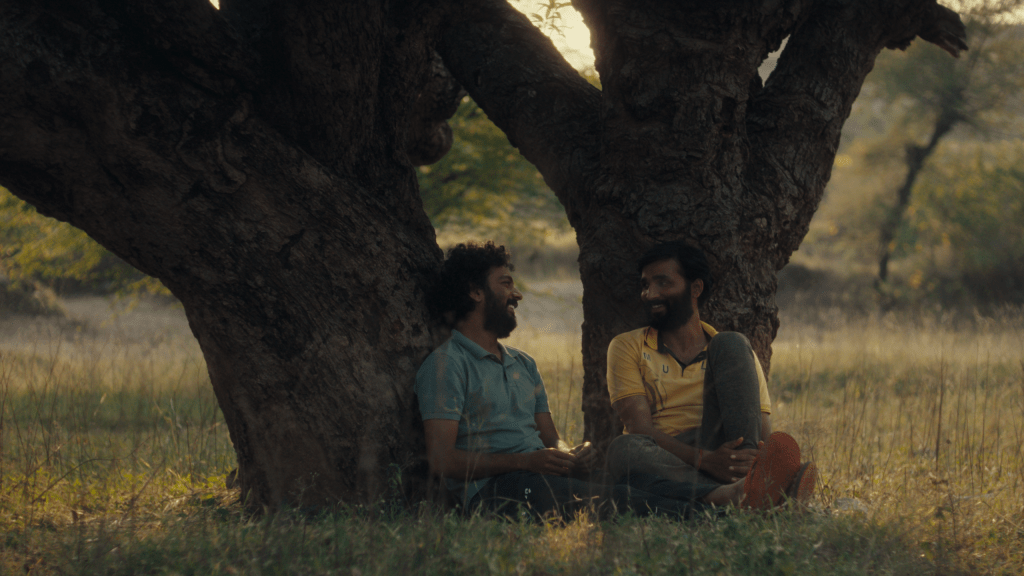
Film Still, Cactus Pears (Sabar Bonda)
Beyond Trauma: Choosing Hope
Saffah Anjum: So many queer narratives still end in tragedy. What conversations do you hope audiences will take home after watching Cactus Pears?
Rohan Kanawade: I really wanted to move beyond the idea that if you’re queer, your life is doomed. A lot of films end on that note – rejection, death, exile. That’s one reality, but it’s not the only one.
I wanted people to feel that same‑sex love is natural, ordinary even, as natural as those trees. And I wanted them to see that acceptance doesn’t have to be complicated. You don’t need a degree, you don’t need to read books on homosexuality to love your child. My mother is illiterate, and she understood and accepted me. If there is love, that’s enough.
After screenings, some people have told me, “I just want to go home and hug my father,” or, “I want to hug my mother.” If the film makes someone want to have a conversation with their parents, or simply embrace them, that’s huge.
Ultimately, I wanted audiences to experience a range of emotions – grief, love, awkwardness, tenderness, hope – and take them home, sit with them. That’s how films stay with you, when they give you feelings you can’t shake off.
Saffah Anjum: That’s a beautiful note to end on. Thank you so much for your time, and congratulations again on Cactus Pears.
Rohan Kanawade: Thank you.